
Bright Spots
Thank you to the more than 80 community members who joined us and our friends at Healthy Democracy to learn about how government by the people is growing through participatory budgeting and civic assemblies. We left the call feeling energized about all the vital work that’s happening to reimagine and rebuild our democracy to center the power and wisdom of everyday people.
Our Time, Our Power: Reflections from the Participatory Democracy Learning Exchange

Brendan Halloran shares his insightful thoughts on our September event, highlighting the big picture dilemmas we are all currently facing. He offers his perspective of what would make participatory budgeting and democracy more sustainable.
Doing Good Work in Complex Systems

What are we trying to accomplish here? Development Manager Jane DeRonne reflects on the questions we should be asking to achieve systems level change using inspiration from architect and civic thinker Indy Johar.
15 Years: Lesson 3: Trust is Key

In 2025, Long Beach, California, announced the third year of its citywide youth-run PB process. In this interview, we discuss the history of participatory budgeting in the second largest city in Los Angeles County and how relationships of trust – between elected officials, residents, and activists – have been crucial to its success.
15 Years: Lesson 2: If you can spend it, you can (and should!) do PB with it

There were, and still are, plenty of reasons to focus PB on capital funds and projects. But other budgets and types of projects are important, too. More and more, we are seeing municipalities (and schools) fund program and service projects in particular through PB. If you can spend it, you can do PB with it.
PBP Learning Webinar: PB Ballot Initiatives and Charter Amendments
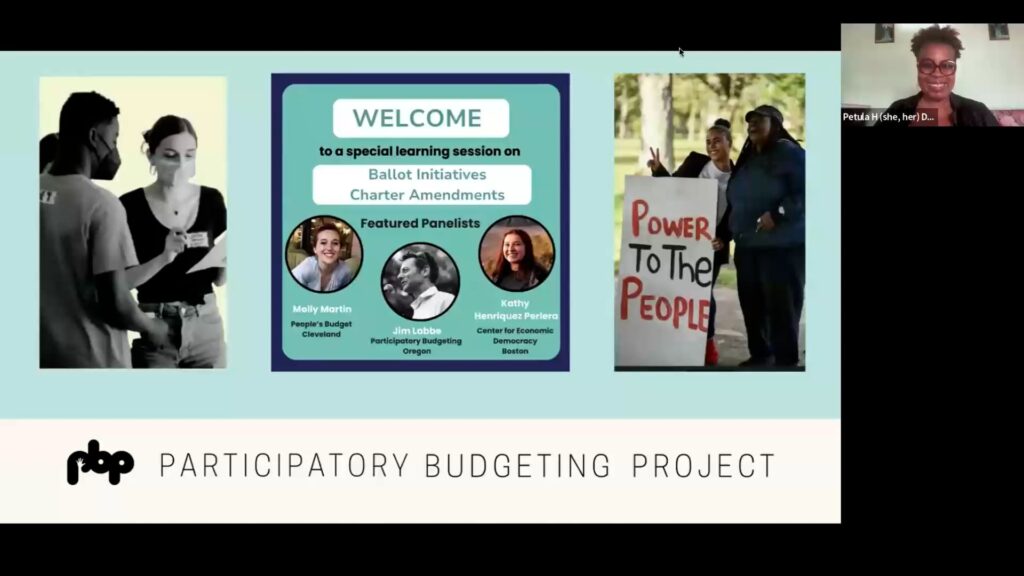
In this special PB learning session, we explored two key strategies advocates and community members can use to achieve this: ballot initiatives and charter amendments. We were led by three outstanding speakers.
15 Years: Lesson 1: School PB is an Onramp to Civic Education

School Participatory Budgeting is an innovative and highly malleable civic learning process designed to build student agency, collaboration, and critical thinking skills while creating equitable opportunities for students to participate in authentic, impactful decision-making opportunities within their school communities and prepare for civic life.
Shifting Budgets, Shifting Power Webinar: Participatory Budgeting as Financial Activism with Author Jasmine Rashid
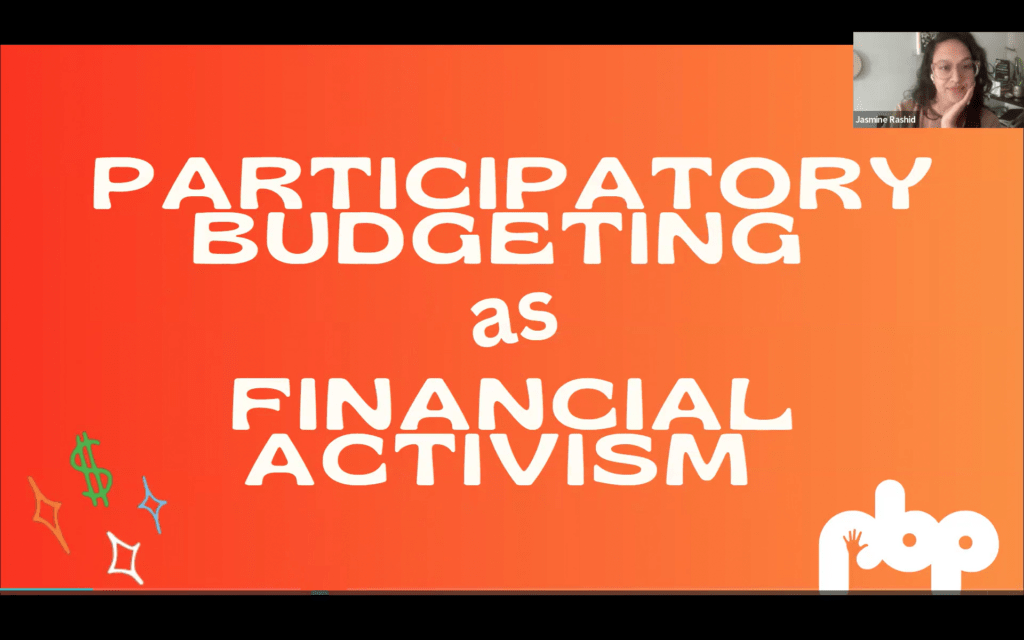
During this interactive 90 minute webinar with activist and author Jasmine Rashid, we discussed the core concepts from her book, “The Financial Activist Playbook: 8 Strategies for Everyday People to Reclaim Wealth and Collective Well-Being.” She laid out the eight strategies and led us through her five step method for taking action as a financial activist.
Introducing a New Series – 15 Years: Where We’ve Been & Where We’re Going
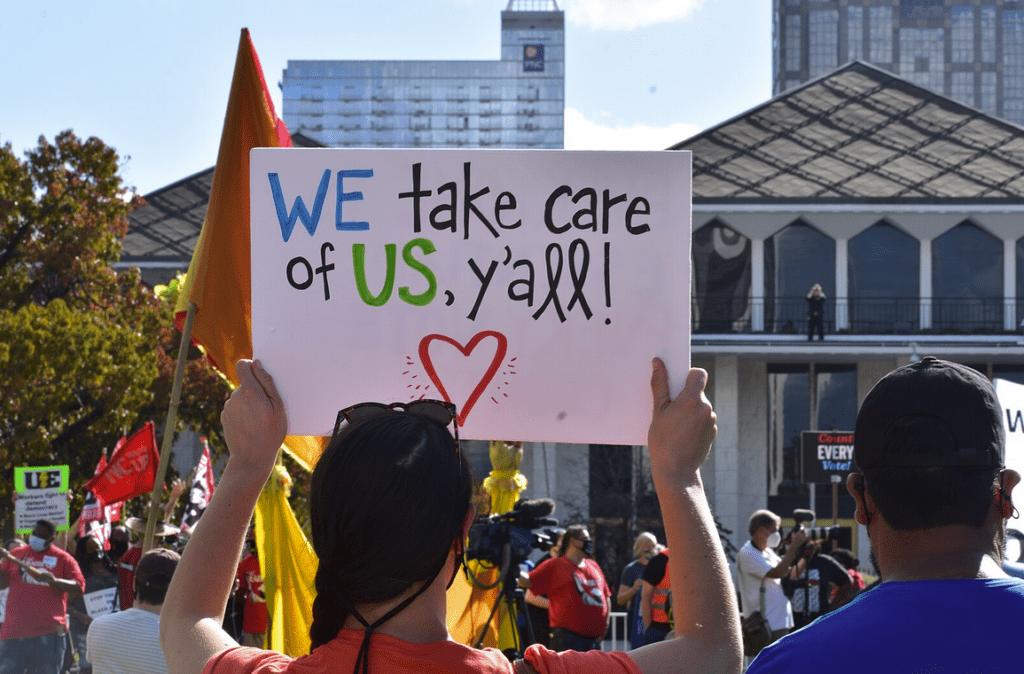
We are excited to debut a new multimedia series sharing lessons on practicing PB from our staff, board, practitioners, and field of participants that we believe are important to reflect on now.
Voices of PB Webinar: Participatory Budgeting as a Tool to Advocate for Racial Equity

We kicked off applications for our PB Seeds California program with a virtual panel. Watch the replay and learn more about the program!